.png)
Bridging gaps: What four Native state officials had to say about their roles, identities
July 14, 2025
Source: The Oklahoman
By: Kayden Anderson
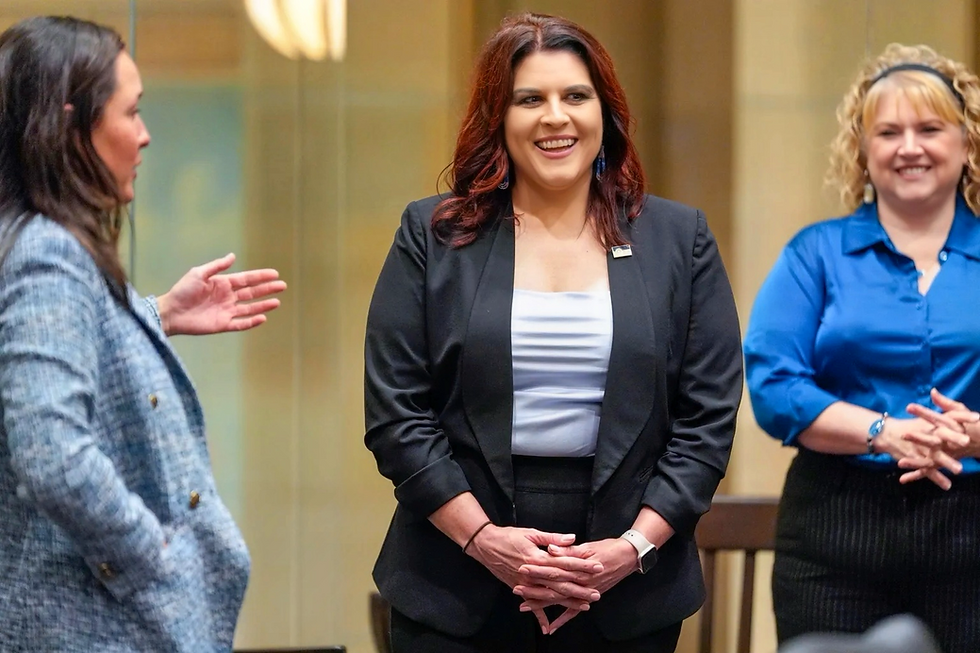
In a time when tribal and state affairs are tense in Oklahoma, some state officials try to bridge the gaps between the governments.
Native Americans in Oklahoma government positions help maintain relationships between state and tribal officials through times of conflict and collaboration.
The Oklahoman spoke with four Native people who serve the state as lawmakers or advisers. Their tribal nations were all affected by the McGirt decision. Here’s what the four had to say about how they view their roles and how their identities influence their work.

Rep. Amanda Clinton, 46, Cherokee
Clinton was sworn into office in June as a Democrat representing Tulsa in House District 71. But those who have been the most excited for her, she said, are the residents of her hometown of Kenwood, a small community in northeast Oklahoma about 46 minutes from the Cherokee Nation’s capital.
“I want to make them proud,” Clinton said. “I want kids from places like Kenwood to know that it doesn’t matter if you come from a small community. It doesn’t matter if you went to a K-8 school. You can achieve whatever you want to achieve.”
Her family has had roots in Rose, Oklahoma, an area of the Cherokee Nation, since the mid-1800s.
As a little girl, Clinton attended one of the Cherokee Nation’s Head Start programs and Kenwood’s K-8 school. She was even in the original Cherokee children’s choir.

After graduating high school from Locust Grove and getting her degree from Oklahoma State University, Clinton worked in journalism before she began working for the tribe.
“That’s really where I learned how government should function is working for the Cherokee Nation, because everything that we do, we know that our sole shareholder is the Cherokee people,” Clinton said. “That’s what we’re tasked with, is making sure that our people are healthy, happy, educated.”

